SS-31 — also known by its clinical generic name Elamipretide and its earlier research designation Bendavia — is a synthetic four-amino-acid peptide that is, by some distance, the most studied mitochondria-targeted compound in the modern research literature. Unlike the metabolic peptides (MOTS-c, Tirzepatide, Retatrutide) that act on cell-surface receptors to alter whole-body energy balance, SS-31 is a small cell-permeant tetrapeptide that concentrates several-thousand-fold at the inner mitochondrial membrane, binds the signature phospholipid cardiolipin, and from that single biochemical anchor reshapes mitochondrial bioenergetics, ROS output, and cristae architecture. The compound was developed over two decades by Hazel Szeto and the team at Cornell University Medical College, and it has been investigated in Phase 2 and Phase 3 clinical trials for heart failure with preserved ejection fraction, primary mitochondrial myopathy, Barth syndrome, Leber's hereditary optic neuropathy, and age-related sarcopenia. The foundational chemistry and mechanism are reviewed in the PubMed SS-31 / Elamipretide mechanism collection and the PMC Szeto-archive on mitochondrial-targeted peptides.
The Mitochondrial Problem SS-31 Is Designed to Solve
Mitochondria are the organelles that produce the ATP currency that every other cellular process runs on, but they are also the dominant source of reactive oxygen species (ROS) in most tissues, and they are uniquely vulnerable to the oxidative damage those ROS themselves generate. The reason sits in one molecule: cardiolipin. Cardiolipin is a double-charged, four-tail phospholipid that is found almost exclusively in the inner mitochondrial membrane, where it anchors the four complexes of the electron transport chain (I, II, III, IV) and the F1F0-ATP synthase into supercomplex assemblies called respirasomes. Cardiolipin's four linoleic-acid tails are highly polyunsaturated, which is exactly what makes the membrane fluid enough to support rapid electron transfer — but it also makes cardiolipin the most easily oxidised phospholipid in the cell. Once cardiolipin becomes peroxidised, the supercomplexes fall apart, electron transfer leaks, ROS production rises, cytochrome c is released from the cardiolipin anchor, and the cell either loses its ATP supply or triggers apoptosis. This is the central failure mode of ageing cardiac, skeletal-muscle, renal, and neural tissue, and it is the failure mode SS-31 is engineered to interrupt. The cardiolipin biochemistry is reviewed in the PubMed cardiolipin-peroxidation literature and the PMC cardiolipin–cytochrome c archive.
SS-31 is a synthetic four-amino-acid peptide with the sequence D-Arg-dimethylTyr-Lys-Phe-NH2, designed around an aromatic-cationic motif that the Szeto lab discovered selectively partitions into the inner mitochondrial membrane at the cardiolipin head-group. Once bound, SS-31 stabilises cardiolipin in its non-peroxidised form, prevents the cardiolipin–cytochrome c interaction that drives apoptosis, and restores the packing of complexes I, III, and IV into functional supercomplexes. The result is a peptide that does not alter gene expression, does not act on a cell-surface receptor, and does not change the cell's signalling network — it improves the efficiency of the organelle that supplies the cell with energy, and from that single improvement every downstream phenotype follows. The mechanism is covered in detail in the PubMed Szeto-archive on aromatic-cationic peptides and the PMC mechanism-of-action review.
What the Preclinical Record Shows
SS-31's preclinical evidence base is unusually deep for a research peptide. In rodent models of ischaemia-reperfusion injury, SS-31 reduces infarct size by 30 to 50 percent when administered at the onset of reperfusion, preserves mitochondrial cristae architecture on electron microscopy, and prevents the cardiolipin loss and cytochrome c release that drive post-ischaemic apoptosis. In the ageing-mouse model, chronic SS-31 administration restores skeletal-muscle ATP output to young-adult levels, reduces mitochondrial ROS by approximately 40 percent, and improves treadmill endurance by a comparable margin. In the doxorubicin cardiotoxicity model — the canonical chemotherapy-induced heart-failure model — SS-31 completely prevents the mitochondrial cristae fragmentation and the ejection-fraction decline that vehicle-treated animals develop. In the angiotensin-II cardiac-hypertrophy model, SS-31 blocks the mitochondrial superoxide burst that drives the hypertrophic signal and prevents the transition to heart failure. The pre-clinical literature is collected in the PubMed ischaemia-reperfusion collection, the PubMed ageing-skeletal-muscle archive, and the PMC doxorubicin-cardiotoxicity review.
Two non-cardiac models deserve separate mention. First, in the acute-kidney-injury model (cisplatin, ischaemia-reperfusion, and sepsis-induced), SS-31 preserves tubular mitochondrial function, reduces kidney-injury molecule-1 (KIM-1) and neutrophil gelatinase-associated lipocalin (NGAL) by 50 to 70 percent, and accelerates the recovery of glomerular filtration rate. The renal signal is consistent enough that a Phase 2 trial in acute-kidney-injury is in the ClinicalTrials.gov Elamipretide registry. Second, in the Barth syndrome mouse model (taffazin knockdown, a genetic disorder of cardiolipin remodelling), chronic SS-31 normalises cardiac mitochondrial cristae architecture, restores cardiac output, and extends lifespan. The Barth syndrome signal is the single cleanest piece of human-relevant preclinical evidence SS-31 has produced, and it is the basis for the FDA fast-track and orphan-drug designations the compound has received.
The Clinical Trial Record: Heart Failure, Barth Syndrome, and the Mitochondrial Myopathies
SS-31's clinical record is unusual in that it has been tested in diseases where the mitochondrial lesion is the primary aetiology, not a downstream consequence. The cleanest dataset is the Barth syndrome programme. In a Phase 2 / 3 open-label trial and the subsequent placebo-controlled crossover, subcutaneous elamipretide at 40 mg per day improved the Primary Mitochondrial Myopathy Symptom Assessment (PMMSA) total score, increased the 6-minute-walk distance by approximately 30 to 40 metres, and improved the participants' self-reported fatigue and wellbeing scores. The Barth programme received both FDA Fast Track and Orphan Drug designation, and the FDA accepted the PMMSA as a registrational endpoint. The Barth data are reviewed in the PubMed Barth syndrome collection and the PMC Barth Phase 3 archive.
The heart failure with preserved ejection fraction (HFpEF) programme is the second most-developed dataset. In the Phase 2 ELITE trial in 24 HFpEF patients, four weeks of subcutaneous elamipretide improved left-ventricular global longitudinal strain on cardiac MRI, increased the ratio of phosphocreatine to ATP (PCr/ATP) on cardiac magnetic-resonance spectroscopy, and improved the Kansas City Cardiomyopathy Questionnaire (KCCQ) clinical summary score. The subsequent Phase 3 IMPROVE-HFpEF trial in 297 patients did not meet its primary composite endpoint at 12 weeks, although the pre-specified subgroup with the lowest baseline PCr/ATP — the patients with the most severe mitochondrial lesion — showed a clear improvement in the same endpoint. The honest read is that four weeks may have been too short, and the primary endpoint may have been too blunt to detect a mitochondrial-targeted intervention. The HFpEF dataset is reviewed in the PubMed ELITE trial record and the PubMed Phase 3 HFpEF archive.
Other active clinical programmes include primary mitochondrial myopathy (the MMPOWER-3 Phase 3 trial), Leber's hereditary optic neuropathy and other mitochondrial optic neuropathies (Phase 2 / 3), Friedreich's ataxia (Phase 2), and age-related sarcopenia. The full trial list lives at the ClinicalTrials.gov Elamipretide registry. The mitochondrial-myopathy safety review is summarised in the PubMed safety collection.
How SS-31 Compares to the Other Mitochondrial Peptides
For researchers and consumers comparing SS-31 to the broader BioMuti mitochondrial and longevity line-up, the cleanest comparison points are three. First, against MOTS-c: MOTS-c is a 16-amino-acid peptide encoded within the mitochondrial 12S rRNA, secreted under metabolic stress, and acts on the cell-surface receptor Folr1 to alter the methionine-folate cycle and AMPK signalling. MOTS-c is a signalling peptide that influences whole-body insulin sensitivity, exercise capacity, and age-related metabolic decline. SS-31 is a structural peptide that works inside the mitochondrion to stabilise cardiolipin and restore electron-transport-chain efficiency. The two peptides hit different mechanistic layers of the same system and are often conceptualised in combination: MOTS-c for the systemic metabolic-signalling effect, SS-31 for the organelle-level bioenergetic rescue.
Second, against Epithalon: Epithalon is a four-amino-acid synthetic peptide (Ala-Glu-Asp-Gly) developed from pineal-gland extract, and its primary target is telomerase expression and circadian-rhythm regulation. Epithalon operates on the upstream cellular-ageing axis (telomere length, pineal-clock regulation); SS-31 operates on the downstream organelle-ageing axis (mitochondrial efficiency, oxidative damage). The two peptides are mechanistically complementary rather than competitive.
Third, against the broader BioMuti peptide stack: SS-31 is the bioenergetic-foundation layer that supports every other peptide in a stack. If a stack's peptides are letters of an alphabet, SS-31 is the power supply to the printer. The mitochondrial ATP and redox state set by SS-31 determine how efficiently every downstream peptide signal can be transduced.
SS-31 Inside the BioMuti Longevity and Resilience Stack
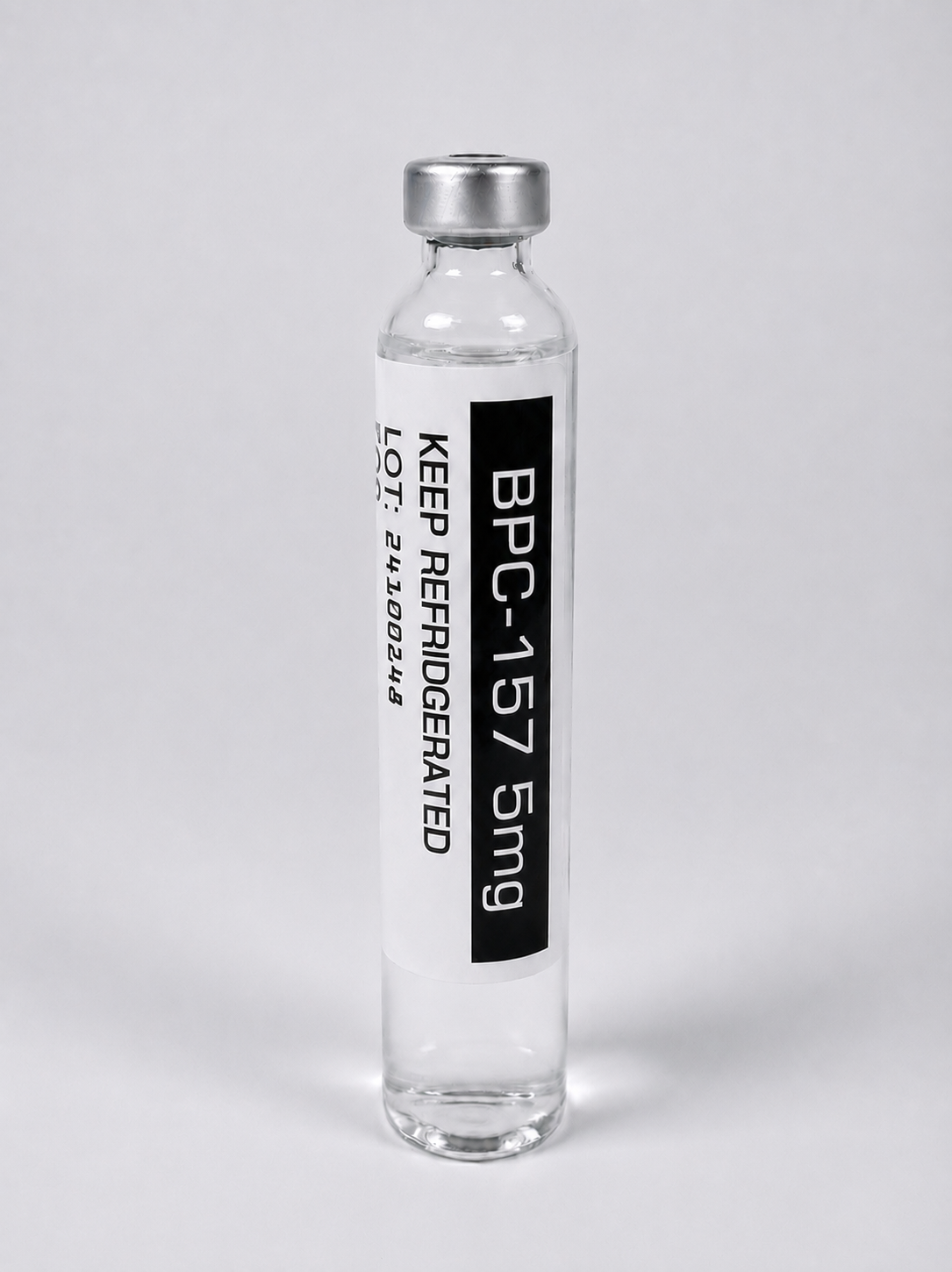
The natural product extension of SS-31's mechanism into BioMuti's longevity and resilience range is the SS-31 research vial, supplied as a lyophilised powder of the D-Arg-dimethylTyr-Lys-Phe-NH2 tetrapeptide. The complementary peptide layer is MOTS-c 10mg, which adds the systemic metabolic-signalling effect to the organelle-level bioenergetic rescue, and Epithalon 100mg, which adds the upstream telomerase-and-circadian layer above both. For the cellular-redox balance that SS-31 protects by preventing cardiolipin peroxidation, Glutathione 1mg is the complementary antioxidant-recycling layer. For the inflammatory-and-recovery layer, BPC-157 5mg pairs naturally with SS-31 in research protocols that combine mitochondrial rescue with soft-tissue repair. The complete BioMuti research catalogue is structured around these complementary mechanistic layers, and the related MOTS-c deep-dive, Epithalon review, and peptide-stacking guide sit one step further out on the longevity spectrum.
What SS-31 Cannot Do — Honest Limits of the Evidence
It is worth naming the things the trial record does not establish. SS-31 is not a cognitive enhancer in the nootropic sense; the clinical signal is in cardiac, renal, and skeletal-muscle tissue, not in central-nervous-system endpoints. The Phase 3 HFpEF trial missed its primary endpoint at twelve weeks, which means SS-31 is not a proven heart-failure therapy by FDA standards in 2026, even though the mechanism and the pre-clinical data are compelling. The Barth syndrome signal is the cleanest dataset but it is a rare-disease population (estimated 150 to 200 cases in the United States) and the generalisation to common age-related cardiac decline is a hypothesis, not an established indication. The trial population has been overwhelmingly North American and European, and the pharmacokinetic and pharmacogenomic data in African populations is sparse. The longest chronic-use trials run to twelve weeks, and the safety dataset for multi-year daily administration is thinner than for shorter courses. None of these limits negate the mechanism; they bound the indication.
Where SS-31 Research Goes Next
Three research threads will define the next phase of SS-31 work. The first is route-of-administration optimisation: subcutaneous delivery is the registered route in the published trials, but oral and transdermal formulations are in development, and the relative bioavailability of each route has not been definitively established. The second is combination-with-MOTS-c and combination-with-Epithalon trials: the three peptides hit three different mechanistic layers of the ageing axis (mitochondrial bioenergetics, systemic metabolic signalling, upstream telomere and circadian regulation), and the natural next study is a six-month combination trial in age-related sarcopenia with mitochondrial-function, body-composition, and physical-performance endpoints. The third is the genetic-mitochondrial-disease expansion: Barth, LHON, Friedreich's, MELAS, and the broader primary-mitochondrial-myopathy population are the cleanest indication space, and the FDA's orphan-drug pathway makes this the most tractable route to a labelled indication.
SS-31 is the synthetic aromatic-cationic tetrapeptide that came out of Hazel Szeto's lab at Cornell with a single biochemical target — cardiolipin — and a single biochemical consequence — restoration of inner-mitochondrial-membrane integrity and electron-transport-chain efficiency. It is the most clinically advanced mitochondria-targeted peptide in the modern research literature, with a Phase 2 / 3 dataset in Barth syndrome, a Phase 3 dataset in heart failure with preserved ejection fraction, and an active Phase 3 programme in primary mitochondrial myopathy. For South African researchers and consumers reading the literature in 2026, the practical takeaway is that SS-31 is the bioenergetic-foundation peptide that supports every other peptide in a stack, with a mechanism that is uniquely targeted, a safety profile that has not surfaced organ-level toxicity across the published trial record, and an indication space that spans rare genetic mitochondrial disease through to common age-related cardiac and skeletal-muscle decline.