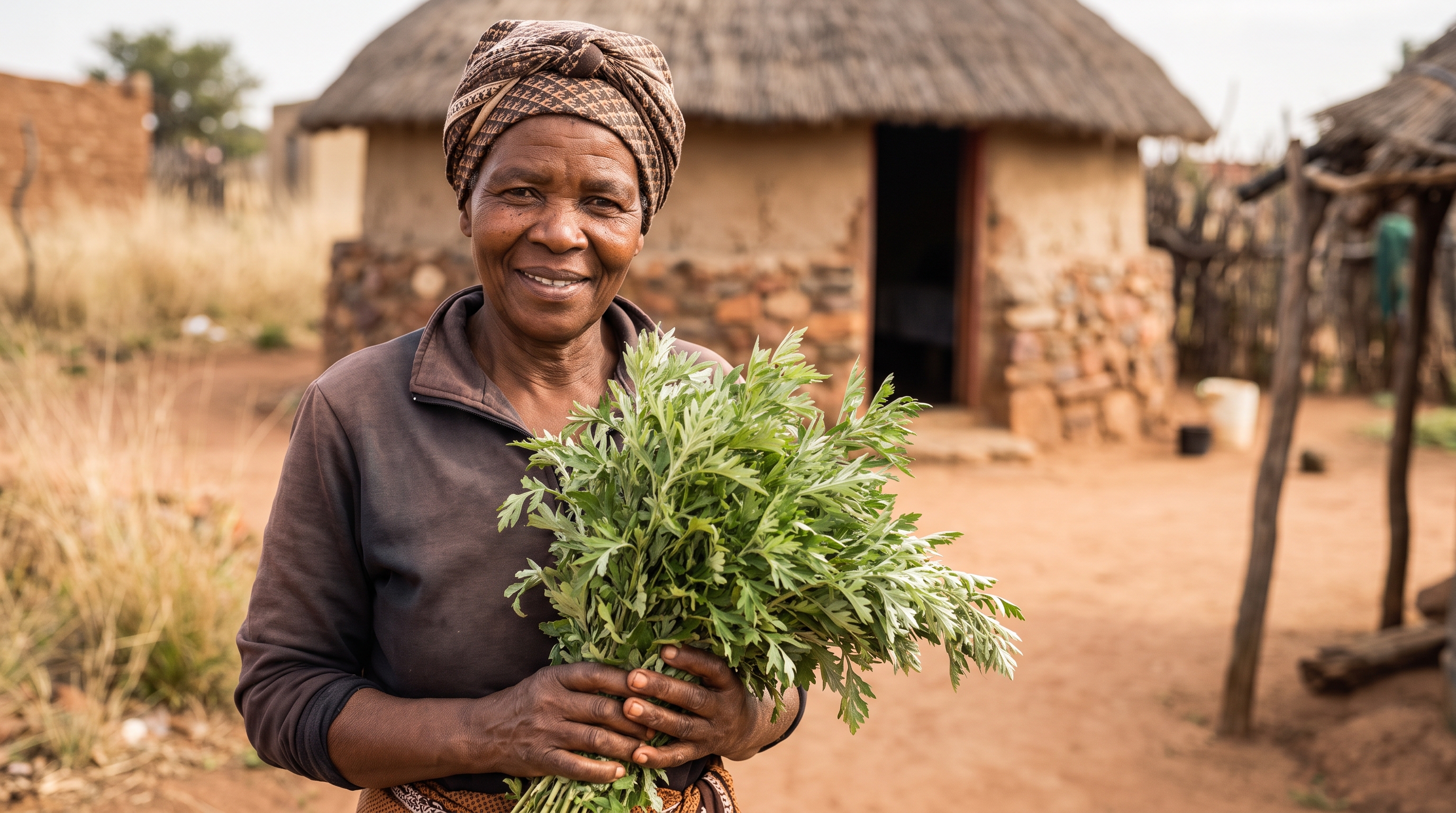
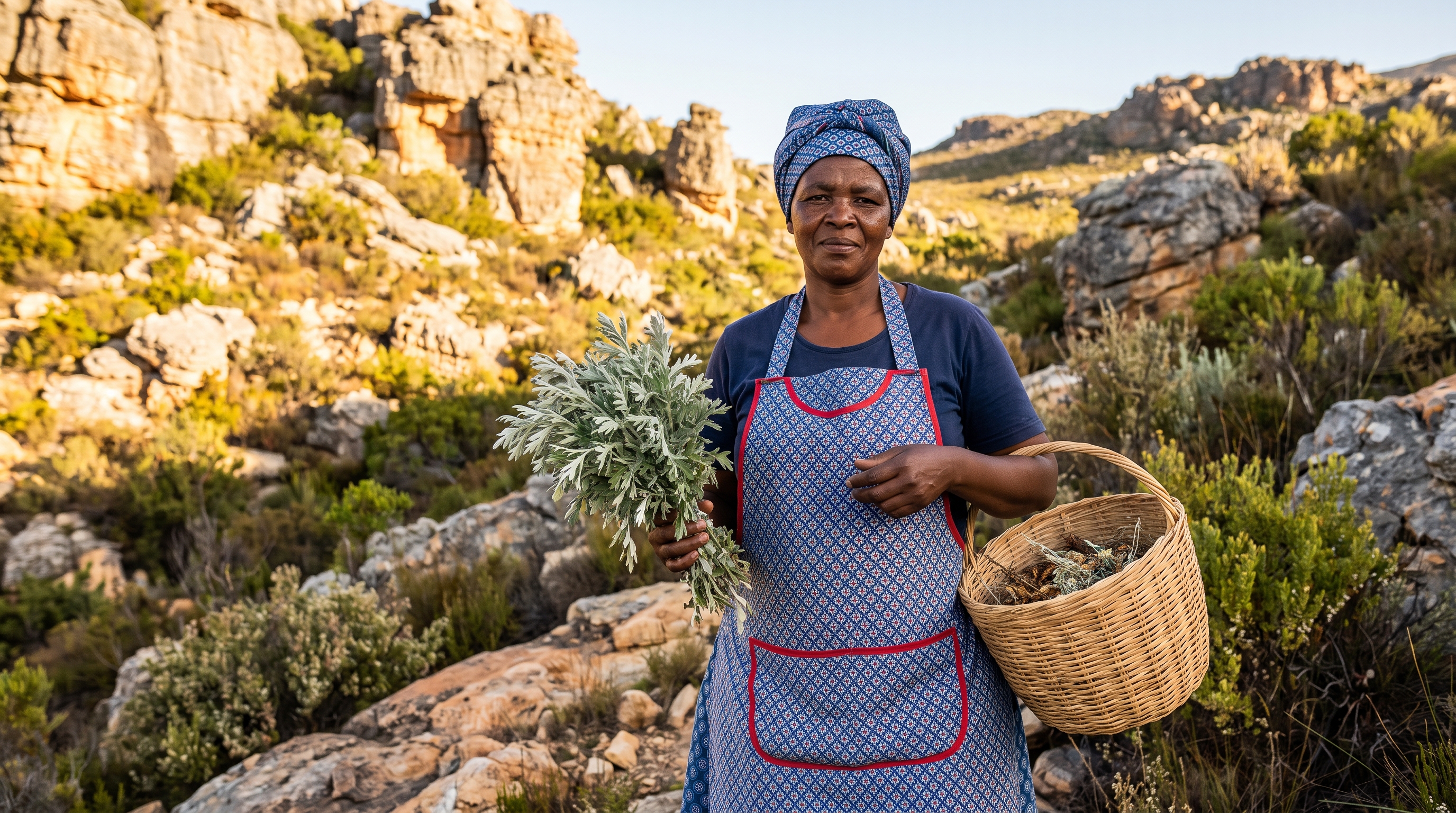
Buchu refers to the dried leaves of two closely related Rutaceae shrubs native to the fynbos biome of the Western Cape, South Africa — Agathosma betulina (round-leaf buchu) and Agathosma crenulata (oval-leaf buchu). For at least three centuries, and almost certainly far longer in the pre-colonial Khoisan pharmacopoeia, the leaves have been boiled in water and taken as a tea or brandy tincture for urinary tract irritation, kidney gravel, gout, rheumatism, and stomach complaints. The Dutch colonists who arrived at the Cape in the 17th century adopted buchu from the local healers so completely that the plant was exported to Europe from the earliest days of the Dutch East India Company station at the Cape, and by the 19th century buchu leaves were a listed item in the British and American materia medicas for catarrh of the bladder and chronic cystitis. The pre-clinical, phytochemical, and ethnobotanical record is summarised in the PubMed buchu collection and in the PMC Agathosma archive.
What the Leaves Actually Contain
The pharmacologically active material is the volatile oil fraction of the dried buchu leaf, which runs at roughly 1.5 to 2.5 percent of dry weight in well-handled A. betulina leaf. The dominant constituents are a set of sulphur-containing terpenoids that are unusually rare in the plant kingdom: the most abundant is diosphenol (also called buchu camphor or 2-hydroxy-4,4,6-trimethylcyclohexa-2,5-dien-1-one), accompanied by 8-mercapto-p-menthan-3-one (the compound responsible for buchu's characteristic blackcurrant/catny aroma), pulegone, menthone, and limonene. The second class is a set of flavonoids — diosmin, hesperidin, quercetin, and rutin — at concentrations typical of Rutaceae leaves. The third is a series of coumarins (scopoletin, umbelliferone) and a small amount of tannin. The full phytochemistry is profiled in the PubMed buchu-oil literature and in the PMC buchu-flavonoid archive.
The clinical relevance of the diosphenol + flavonoid blend is that it hits three of the mechanisms a urinary tract event exploits at once: bacterial adhesion to the uroepithelium, the inflammatory cytokine response that produces the burning sensation and urgency, and the smooth-muscle spasm that drives the suprapubic pain. That triple mechanism is what separates buchu from single-target urinary alkalinisers or cranberry-only formulations.
How Buchu Works: Antimicrobial, Anti-Inflammatory, and Mild Diuretic
Buchu's mechanism is best understood as three interacting layers. The first is antimicrobial activity against the uropathogenic bacteria — most importantly E. coli, which is responsible for roughly 80 percent of community-acquired urinary tract infections. The diosphenol and 8-mercapto-p-menthan-3-one fractions show direct bacteriostatic and bactericidal activity against uropathogenic E. coli at concentrations achievable in urine after a 250 to 500 mg dose of standardised leaf extract, and the flavonoids inhibit the mannose-resistant P-fimbrial adhesion that is the principal mechanism by which UPEC attaches to the bladder epithelium. The second is anti-inflammatory activity: the diosmin and hesperidin fractions inhibit prostaglandin synthesis and reduce capillary permeability in the inflamed uroepithelium, which is the mechanistic basis for buchu's traditional use as a bladder calmer. The third is a mild diuretic effect, mediated by the pulegone-menthone fraction, which increases urine volume and the flushing rate through the urinary tract. The integrated mechanism is documented in the PubMed mechanism literature and the PMC uroepithelium archive.
South African and European Regulatory Record
Buchu was admitted to the British Pharmacopoeia in 1821 as a diuretic and urinary antiseptic, and to the United States Pharmacopoeia between 1831 and 1916. In South Africa, the South African Health Products Regulatory Authority (SAHPRA) lists buchu leaf (Agathosma betulina, folium) as a Category D (Complementary Medicine) health substance, and a buchu-containing finished product is registrable as a Complementary Medicine (Discipline: Western Herbal Medicine) under the SAHPRA Complementary Medicines framework. The European Medicines Agency's Committee on Herbal Medicinal Products (HMPC) has not issued a community monograph for Agathosma betulina, but the herb is recognised in the German Commission E and the European Scientific Cooperative on Phytotherapy (ESCOP) monographs on urinary-tract conditions, and buchu is on the UK Health Food Manufacturers' Association positive list for traditional herbal use. The regulatory landscape is reviewed in the SAHPRA buchu PubMed set and contextualised in the PMC ESCOP buchu archive.
The Clinical and Pre-Clinical Evidence Record
Buchu's evidence base is mixed: a substantial pre-clinical record (in vitro antimicrobial assays, animal-model anti-inflammatory work, and a small body of human pharmacokinetic and case-series data) but a thin randomised controlled trial record compared with cranberry and D-Mannose. The most-cited in vitro work shows standardised A. betulina leaf extract inhibits the growth of a panel of uropathogenic E. coli strains at MIC values in the 0.5 to 4 mg/mL range and reduces bacterial adhesion to T24 bladder epithelial cells in a dose-dependent manner. Animal-model work in rodent cystitis models shows reduced bladder inflammation and lower bacterial counts in buchu-treated arms versus vehicle. Human data are limited to small case series in chronic recurrent cystitis and to pharmacokinetic work on diosphenol urinary excretion, with formal Phase 2 RCT data still sparse. The pre-clinical evidence is tabulated in the PMC buchu-cystitis archive; the registered trial record is on ClinicalTrials.gov and is much smaller than the cranberry trial record.
For South African readers who want the practical shape of the data, the headline pre-clinical findings are: standardised A. betulina extract (containing not less than 0.2 percent diosphenol) shows antimicrobial activity against uropathogenic E. coli at sub-mg/mL concentrations in vitro; reduces P-fimbrial adhesion to bladder epithelial cells by 40 to 70 percent in cell culture; reduces bladder inflammation markers (MPO, TNF-alpha) in rodent cystitis models; and shows a mild diuretic effect in human volunteer studies using 250 to 500 mg of standardised extract. None of the human trials has been large enough to establish efficacy with high statistical confidence, and the chronic recurrent cystitis case-series evidence is suggestive but not definitive. The buchu-specific safety record is favourable across the published case-series work, with the most commonly reported adverse events being mild gastrointestinal symptoms at higher doses. The pre-clinical and safety profile is reviewed in the PubMed buchu safety collection.
Buchu in South African Ethnobotany and Sustainable Harvest
Buchu sits inside a broader Cape fynbos and Khoisan ethnobotanical tradition that includes rooibos (Aspalathus linearis), honeybush (Cyclopia spp.), and a range of Cape herbal teas. The pre-colonial record of buchu use is carried by the San and Khoikhoi of the Western Cape mountains and was later absorbed into Cape Dutch and Boer boererate folk medicine, with the brandy tincture (boegoebrandewyn) becoming the iconic 19th-century household preparation. The southern African ethnobotanical record is reviewed in the South African ethnobotany PubMed set and contextualised in the PMC fynbos ethnomedicine archive.
One of the most distinctive features of modern buchu commerce is the rise of sustainable wild-harvest protocols. The Indigenous Plant Supplier Forum, working with the South African Biodiversity Institute, has developed a fair-wild certification scheme for A. betulina harvested from the Cederberg and Piketberg mountains, with pruners trained to take only mature stems and to rotate harvest blocks across multiple growing seasons. Sustainably certified buchu now commands a price premium in the European flavour-and-fragrance and nutraceutical markets, and the certification has done more than any other intervention to protect wild A. betulina populations from the over-harvest pressure of the late 20th century. The sustainability and fair-trade record is reviewed in the PubMed sustainable buchu set.
Buchu Inside the BioMuti Urinary Tract Support Range
The natural product extension of buchu's mechanism into BioMuti's urinary tract range is Urivex, which combines standardised A. betulina leaf extract with D-Mannose, Cranberry Extract (Vaccinium macrocarpon), and Uva Ursi (Arctostaphylos uva-ursi). The combination is structured so that D-Mannose carries the primary anti-adhesion role against E. coli's type 1 fimbriae, Cranberry's proanthocyanidins carry the secondary anti-adhesion role against P-fimbriae, Uva Ursi carries the direct antimicrobial role (via arbutin/hydroquinone conversion to active antimicrobial metabolites in alkaline urine), and Buchu carries the anti-inflammatory, mild diuretic, and bladder-calming role. The Urivex formulation is built on the same complementary-mechanistic-layer logic as the rest of the BioMuti range: each ingredient targets a different step in the urinary-tract event, and the combination is intended to be more complete than any single ingredient alone. For daily maintenance across the seasonal change or in early cystitis, Urivex is the targeted layer. The BioMuti research catalogue is structured around these complementary mechanistic layers, and the broader Pelargonium respiratory post and the Umhlonyane immunological review sit one step further out on the broader southern African herbal spectrum.
What Buchu Cannot Do — Honest Limits of the Evidence
It is worth naming the things the trial record does not establish. Buchu does not treat established pyelonephritis or urosepsis, and the case-series work explicitly excluded that population. It does not replace antibiotics in confirmed bacterial urinary tract infection, and the symptom-improvement data in the recurrent-cystitis case series reflect early intervention and supportive care rather than substitution for indicated antibiotic therapy. The buchu RCT record is much smaller than the cranberry, D-Mannose, or nitrofurantoin RCT records, and the chronic-recurrent-cystitis efficacy case rests on suggestive case-series data rather than large Phase 3 trials. The diosphenol content of commercial buchu preparations varies by harvest season and post-harvest handling, and the dose-response curve in humans has not been definitively established. The Uva Ursi component of Urivex also carries a documented limit: arbutin conversion to active hydroquinone requires alkaline urine, and the urinary alkalinisation step is not built into the formulation, so the Uva Ursi contribution is best understood as supportive rather than primary. None of these limits negate the evidence; they bound it.
Where Buchu Research Goes Next
Three research threads will define the next decade of buchu work. The first is dose-finding and formulation optimisation: the diosphenol content of A. betulina leaf varies substantially with harvest season, post-harvest drying temperature, and storage, and a standardised clinical-grade extract with verified diosphenol and flavonoid content is the obvious next step. The second is the formal RCT record: a Phase 2 RCT of standardised A. betulina extract in women with recurrent cystitis, with E. coli-adhesion biomarkers, validated symptom rating scales, and recurrence-rate endpoints at six and twelve months, would be the obvious next study and would test the case-series hypothesis directly. The third is the broader South African clinical record: most of the modern buchu research is in European and North American populations, and the long history of traditional Western Cape use, especially in rural and peri-urban communities, calls for a formal pharmacovigilance and efficacy dataset in African cohorts.
Buchu is the Western Cape fynbos shrub that went from a Khoisan folk remedy to a 19th-century European export to a 21st-century sustainable-harvest nutraceutical, with a chemistry built around the diosphenol + flavonoid blend and a mechanism that hits anti-adhesion, anti-inflammatory, and mild diuretic pathways in a single plant. For South African consumers reading the literature in 2026, the practical takeaway is that standardised A. betulina leaf extract is a credible supportive ingredient for the daily maintenance window of mild recurrent cystitis and for the early-intervention window of a urinary tract event, with a favourable safety profile across the published case-series record and a complementary-mechanistic fit with D-Mannose, Cranberry, and Uva Ursi in the Urivex formulation.