Prostate comfort is one of those quietly significant pillars of men's health that most men only start paying attention to once a symptom arrives — usually in the form of a hesitant stream, a more frequent night-time loo visit, or the persistent low-grade urgency that makes long drives and movie theatres feel like strategic exercises. South African men are not exempt. The lifetime risk of benign prostatic hyperplasia (BPH) — the non-cancerous enlargement of the prostate that affects most men over 50 — sits in the same range here as it does in Europe and North America, and the standard first-line approach (alpha-blockers and 5-alpha-reductase inhibitors) is well established but not universally tolerated.
Alongside that conventional pathway sits a longer, slower story: a small group of plant-derived compounds that have been researched for prostate comfort since the late 1960s. Three of them — Serenoa repens (saw palmetto), Pygeum africanum (the African cherry tree) and pumpkin seed oil — are the backbone of BioMuti's Prostivex formulation, paired with zinc for glandular function. The research record on each is uneven in quality, but the consistent signal across three independent botanical sources is what makes the combination interesting.
Saw palmetto: the 30-year research standard
Saw palmetto is the most clinically investigated of the three. A 2023 update of the Cochrane systematic review on Serenoa repens monotherapy for BPH — the highest-quality evidence-synthesis body in urology — catalogued 27 randomised trials covering more than 4,500 participants. The review's bottom line is famously cautious: extracts of saw palmetto berry, used as a single agent, did not consistently outperform placebo on symptom score or peak urinary flow in the larger, more rigorous trials. Methodological critiques (the dose, the extract standardisation, the patient population) continue to divide the field.
What the Cochrane record does not erase is a parallel literature of mechanistic work. Saw palmetto contains free fatty acids and phytosterols that have been shown in vitro to inhibit 5-alpha-reductase, the enzyme that converts testosterone to dihydrotestosterone (DHT) in the prostate. DHT is the dominant androgenic driver of stromal and epithelial growth in the gland, and reducing local DHT signalling is the same biological logic that underpins the prescription drug finasteride. The Cochrane 2023 review is available on the PubMed index of Serenoa repens reviews, and a clinical-trials search for the same compound is at ClinicalTrials.gov.
Pygeum africanum: the bark of an African tree
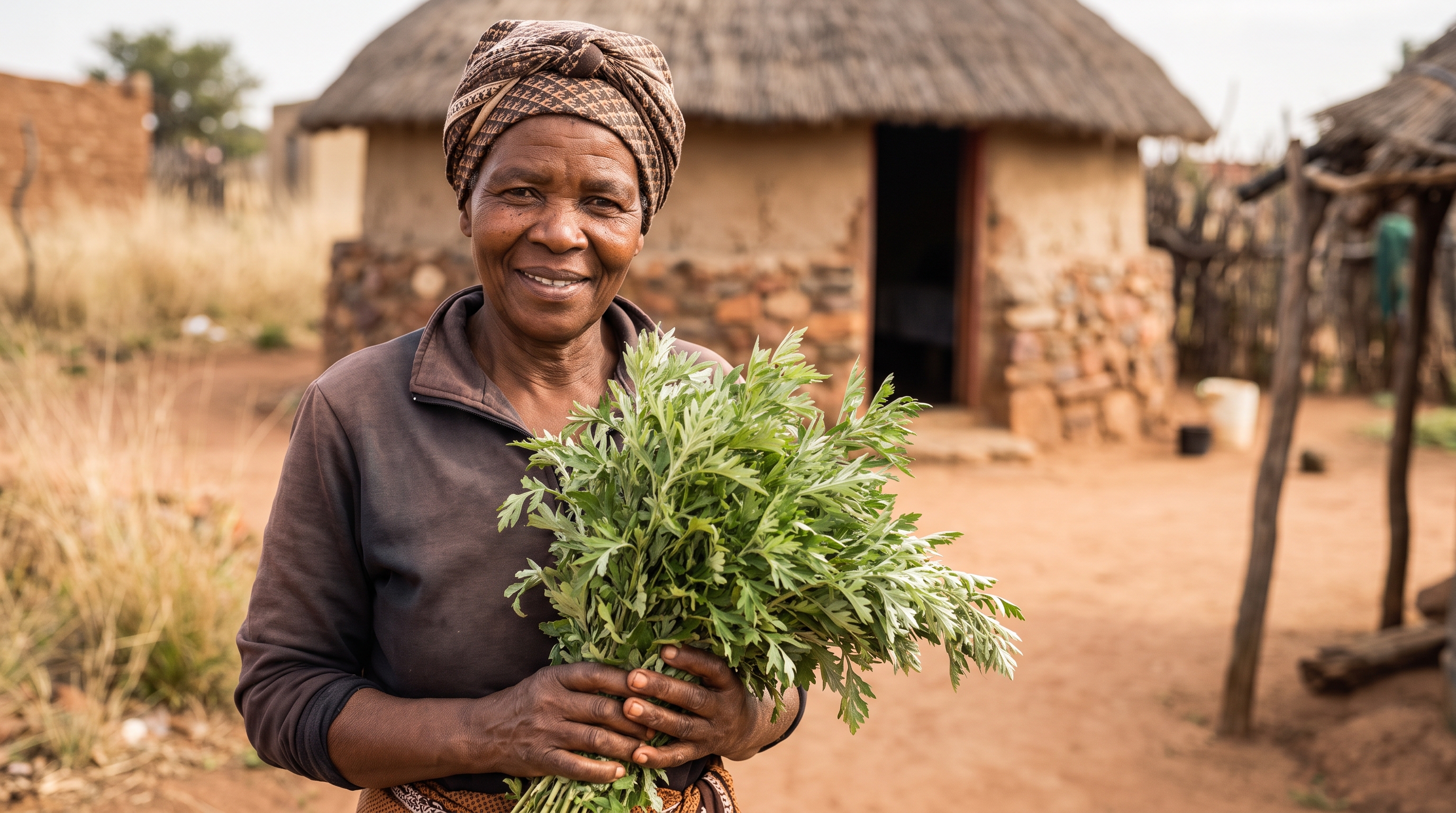
Pygeum africanum is the second ingredient in Prostivex and the one with the strongest African provenance in the formulation. The bark comes from a large evergreen tree native to the montane forests of sub-Saharan Africa — Cameroon, Madagascar, Kenya, Tanzania and South Africa's Limpopo and Mpumalanga escarpment forests. The bark has been used in European phytotherapy since the 1960s, when it was introduced as a treatment for "micturition difficulties" in older men.
The clinical evidence base is smaller than saw palmetto's but methodologically more consistent. A 2002 review published in Current Therapeutic Research pooled 18 randomised trials covering 1,562 men. The pooled analysis reported improvements in urinary symptom scores, peak flow rate, and residual urine volume versus placebo. The doses used in the included studies ranged from 75 to 200 mg daily of standardised bark extract, and the authors noted a dose-response relationship favouring the higher end of that range. A more recent search for the same compound on the PMC full-text archive turns up several 2024-2025 re-examinations of the original data, with researchers noting that the in-vitro anti-inflammatory actions of the bark's pentacyclic triterpenes (specifically beta-sitosterol and ferulic acid esters) may explain a portion of the symptomatic benefit that the 5-alpha-reductase mechanism alone does not.
The ecological footnote matters here: Pygeum africanum is listed under CITES Appendix II as a species of conservation concern, and the bulk of the commercial bark now comes from sustainably managed West and Central African plantations rather than wild harvest. BioMuti sources its extract through suppliers who carry the relevant chain-of-custody documentation, but it is worth being an informed consumer of any Pygeum product on this point.
Pumpkin seed oil: the gentler third
Pumpkin seed oil is the third leg of the stool, and the one with the lightest mechanistic case. A 2014 randomised trial from the Journal of Medicinal Food followed 60 men with mild-to-moderate BPH over 12 months, comparing 500 mg daily of pumpkin seed oil to placebo. The active group showed a significant reduction in International Prostate Symptom Score (IPSS) at the 6- and 12-month time points, with no meaningful adverse events. A second 2018 trial from a Korean group replicated the finding on a larger cohort (120 men, 12 months), reporting the same direction of effect plus a measurable improvement in quality-of-life scores.
The proposed mechanism is multi-modal. Pumpkin seed oil is rich in delta-7-sterine and contains significant zinc, both of which have been independently studied in the context of prostate cell-cycle regulation. Zinc concentrations in the prostate are higher than in any other soft tissue in the male body, and a mild zinc deficit has been associated with age-related prostate changes. The Prostivex formulation pairs the botanical trio with elemental zinc, which is why the daily serving of two capsules contains 15 mg of the mineral.
What the combination actually does
No trial has tested the exact Prostivex formulation head-to-head against placebo or against a single-agent comparator. That is true of essentially every multi-ingredient herbal supplement on the South African market and is not a special-pleading of Prostivex — it is a structural feature of the category. What the published evidence does support is the use of each ingredient at its commonly studied dose, with the expectation that symptom improvement (when it occurs) tends to be modest, gradual, and most visible in men with mild-to-moderate BPH rather than severe cases.
The realistic expectation is this: three to six months of consistent daily use, with symptoms tracked by the same IPSS questionnaire a urologist would use, is a reasonable self-experiment. If no improvement is visible by the six-month mark, the formulation is unlikely to be the right tool for that individual, and a conversation with a urologist about prescription options is the appropriate next step. Prostivex is not positioned as a replacement for clinical assessment — prostate symptoms warrant a proper examination regardless of which supplement a man reaches for first, because the same symptoms can have aetilogies that need different management.
Safety and interactions
The safety record across all three botanicals is favourable. Side effects in the published trials are uncommon, mild, and predominantly gastrointestinal (loose stools, mild nausea). Saw palmetto has been studied alongside 5-alpha-reductase inhibitors and does not appear to potentiate or antagonise them in a clinically meaningful way, but anyone on finasteride or dutasteride should still flag the supplement to their prescriber. Pumpkin seed oil is a common culinary ingredient, and the dose in Prostivex is well within normal dietary exposure. Zinc at 15 mg daily is below the upper tolerable intake level of 40 mg for adult men, but chronic intake above 40 mg/day is associated with copper depletion, so anyone stacking Prostivex with a separate zinc supplement should be mindful of the cumulative dose.
For men whose symptoms are stable, mild, and have been clinically assessed as benign, a multi-ingredient formulation like Prostivex offers a reasonable, evidence-informed option — the saw palmetto contributes the largest body of clinical data, the Pygeum adds the strongest anti-inflammatory signal, and the pumpkin seed oil plus zinc covers the nutritional side of the picture. None of this is a substitute for a check-up, and any new symptom — blood in the urine, pain, sudden worsening — deserves a same-week clinical review. Read the broader category context on the PubMed index for BPH and herbal medicine, and explore the rest of the BioMuti men's-health range on the shop.