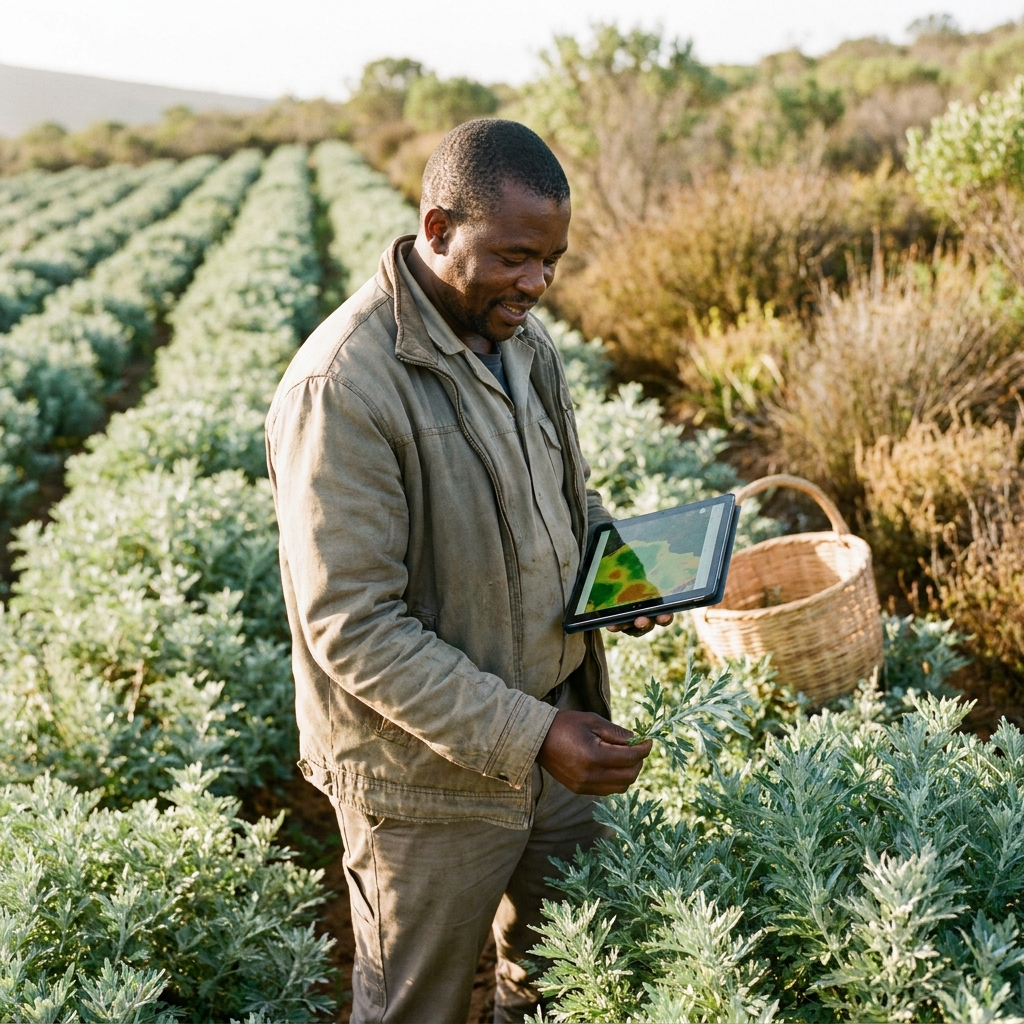
Pelargonium sidoides and Respiratory Support: The Science Behind a South African Botanical
When the seasons shift and the air turns cool, respiratory wellness becomes a priority for many South African households. Among the botanicals tapped for this purpose, few are as deeply rooted in local tradition as Pelargonium sidoides — the plant behind the traditional remedy known as umckaloabo. A member of the geranium family native to the Eastern Cape and KwaZulu-Natal, this unassuming perennial has attracted serious scientific attention for its role in supporting upper respiratory tract health.
Here is what the peer-reviewed evidence actually says, and how a blend of complementary African botanicals can support the respiratory system through the seasons.
What is Pelargonium sidoides?
Pelargonium sidoides is a flowering plant long used in Southern African traditional medicine. Its root has a reputation in local healing traditions for supporting the body through coughs, colds, and seasonal congestion. The common name umckaloabo derives from the Zulu tradition, where the roots were prepared as herbal preparations for chest complaints. Ethnopharmacological documentation describes its use across generations, and modern research has since turned its attention to the biologically active compounds these roots contain.
What the research suggests
Controlled studies and systematic reviews have examined Pelargonium sidoides extracts (usually standardised as EPs 7630) for their role in acute respiratory tract infections. A widely cited Cochrane review assessed the available trial data and concluded that pelargonium extracts may reduce the duration and severity of common cold symptoms in adults, while noting that more high-quality trials were needed to confirm the effect across populations.
Laboratory research has proposed several mechanisms of action:
- Antiviral activity. In vitro studies suggest pelargonium constituents may interfere with the ability of certain respiratory viruses to attach to and enter host cells, potentially limiting viral replication early in infection.
- Immunomodulation. Extract constituents appear to influence innate immune signalling, helping the body mount a balanced response rather than an exaggerated inflammatory one.
- Antibacterial effects. Research indicates the extract may inhibit bacterial adhesion to respiratory epithelial cells, complementing the immune system's own defences.
- Mucous membrane support. By supporting healthy respiratory mucosal tissue, the botanical may help maintain the natural barrier function of the airways.
Equally important is the plant's safety profile: short-term use in the studied doses was generally well tolerated, with mild gastrointestinal upset being the most commonly reported side effect.
The research base: citations you can check
For readers who want to go deeper, the following resources are credible starting points:
- PubMed — search for Pelargonium sidoides: pubmed.ncbi.nlm.nih.gov/?term=Pelargonium+sidoides
- PubMed Central (PMC) — open-access full-text research: www.ncbi.nlm.nih.gov/pmc/?term=Pelargonium+sidoides
- Cochrane Library — systematic reviews of herbal remedies for the common cold: cochranelibrary.com/search?q=pelargonium
- Journal of Ethnopharmacology — traditional medicine and phytochemistry: sciencedirect.com/journal/journal-of-ethnopharmacology
Why the whole blend matters
Traditional respiratory remedies seldom rely on a single plant, and Pelargonium sidoides is strongest when understood alongside the botanicals it is traditionally combined with. Consider the supporting cast:
- Echinacea — a well-studied herb associated with immune support, particularly during the colder months.
- Artemisia afra (umhlonyane) — the most widely used indigenous medicinal plant in South Africa, with a long record of use for respiratory complaints.
- Ginger — traditionally used for warming and soothing properties, and studied for its bioactive gingerols.
- Boswellia (frankincense) — known for its boswellic acids, which have been investigated for inflammatory-modulating effects.
It is this complementary approach — a blend of botanicals, each with its own traditional and scientific rationale — that forms the character of a thoughtfully formulated respiratory product.
Respiratory wellness in the South African context
South Africa's seasonal respiratory pressures are well documented, and local botanicals offer a culturally resonant path to everyday wellness. Pelargonium sidoides is remarkable not only because it works, but because it grows here and has been used here for generations. Regulatory awareness matters too: the South African Health Products Regulatory Authority (SAHPRA) classifies herbal supplements separately from medicines, and it is always wise to check product labelling and to speak with a healthcare provider before starting any supplement, especially during pregnancy, while breastfeeding, or alongside existing medication.
The BioMuti stack
At BioMuti, respiratory support is anchored by Broncanol, a respiratory support formulation built around Pelargonium sidoides, Echinacea, Artemisia afra, Ginger and Boswellia. For those wanting to pair respiratory support with a broad-spectrum immune foundation, Immunol draws on the antimicrobial and immune-supporting traditions of Artemisia afra and other indigenous botanicals. Both are available through the BioMuti shop.
The takeaway
Pelargonium sidoides is a genuine meeting point of tradition and modern evidence. The research suggests it has a legitimate role in supporting the upper respiratory tract, and its safety profile is reassuring for short-term seasonal use. When paired with complementary botanicals and sensible seasonal habits — warm clothing, good hydration, and adequate rest — it offers a gentle, science-adjacent way to support respiratory wellness.
As always, this information is educational and not a substitute for medical advice. If symptoms are severe or persistent, consult a qualified healthcare professional.