Few herbal ingredients have crossed from traditional Ayurvedic practice into South African pharmacy shelves as quickly as ashwagandha. Walk into a Clicks or Dis-Chem in 2026 and you will find it in capsules, powders, gummies, and even combined with magnesium or CBD in sleep blends. But does it actually work for stress and anxiety, or is the hype outrunning the evidence?
What is ashwagandha?
Ashwagandha (Withania somnifera) is a small shrub native to India, the Middle East and parts of Africa. Its roots have been used in Ayurvedic medicine for over 3,000 years, where it is classed as a rasayana — a rejuvenating tonic. The plant contains a family of compounds called withanolides, which are thought to drive most of its biological activity.
Modern researchers classify ashwagandha as an adaptogen, meaning it is theorised to help the body resist physical and mental stressors without pushing baseline physiology in one fixed direction. That distinction matters: an adaptogen is not a sedative, and it is not a stimulant. It is meant to nudge your stress-response system back towards balance.
What does the clinical evidence actually show?
A 2021 systematic review and meta-analysis published in PubMed pooled the results of seven randomised controlled trials covering 491 adults with elevated stress and anxiety. Across the studies, ashwagandha extract (mostly KSM-66 or Sensoril branded extracts at 240–600 mg daily) produced statistically significant reductions in perceived stress scores compared with placebo. The effect was strongest at 8–12 weeks of continuous use.
A separate 2023 review in the Journal of Ethnopharmacology focused specifically on cortisol, the so-called "stress hormone". The authors concluded that ashwagandha root extract consistently lowered morning cortisol and salivary cortisol in chronically stressed adults, although they flagged the heterogeneity of dosing protocols as a limitation.
Sleep and anxiety-specific trials
A randomised trial of 58 participants published in 2019 found that 300 mg of ashwagandha taken twice daily for 10 weeks improved sleep quality, sleep onset latency, and total sleep time in subjects with insomnia and high anxiety. Improvements in the Hamilton Anxiety Rating Scale (HAM-A) were also significantly greater in the ashwagandha group than in the placebo group.
For general anxiety, a 2020 trial of 60 adults with diagnosed generalised anxiety disorder compared ashwagandha against standard psychotherapy over six weeks. The herbal group showed meaningful reductions in HAM-A scores, with researchers noting it was well tolerated and produced fewer reported side-effects than typical pharmaceutical first-line options.
How might it work?
The proposed mechanisms are not fully settled, but the leading theories include:
- HPA axis modulation. The hypothalamic-pituitary-adrenal axis drives cortisol release. Ashwagandha appears to dampen an over-active HPA axis in chronically stressed individuals without flattening healthy cortisol responses to acute challenges.
- GABAergic activity. Some withanolides bind to GABA receptors in a similar (but much milder) way to benzodiazepines, which may explain the calming and sleep-improving effects without the dependency profile of pharmaceutical sedatives.
- Antioxidant and anti-inflammatory effects. Chronic stress drives low-grade inflammation. Ashwagandha's antioxidant capacity may help buffer that downstream cascade.
Dosing, timing and what to look for
Most clinical trials use standardised root extracts in the 240–600 mg daily range, split into two doses. The two most studied branded extracts are KSM-66 (full-spectrum root) and Sensoril (root-and-leaf). KSM-66 is typically taken at 300–600 mg/day, while Sensoril tends to be effective at lower doses (250–500 mg/day) because of its higher withanolide content.
For stress and anxiety, take with food in the morning and evening. For sleep specifically, take the larger portion 30–60 minutes before bed. Effects usually build over 2–4 weeks, so do not expect an immediate hit.
Safety and side-effects
Ashwagandha is generally well tolerated. The most commonly reported side-effects are mild gastrointestinal upset, drowsiness (especially at higher doses) and, rarely, loose stools. It is not recommended during pregnancy or breastfeeding, and people on thyroid medication, immunosuppressants, or sedatives should consult a healthcare provider before use, as interactions have been reported.
A 2023 case series raised questions about rare liver injury associated with ashwagandha-containing supplements, but the authors noted they could not establish causation and that the absolute risk appears very low compared to the volume of use globally. As with any supplement, buy from a reputable supplier that publishes third-party Certificates of Analysis.
South African regulatory context
In South Africa, ashwagandha is regulated as a Complementary Medicine under the SAHPRA Complementary Medicines framework. Products must be listed (not registered as medicines) and may not make explicit therapeutic claims such as "treats anxiety" or "cures insomnia". Look for an "N" or "D" number on the label, which indicates the product has been notified to SAHPRA.
Where it fits in a BioMuti routine
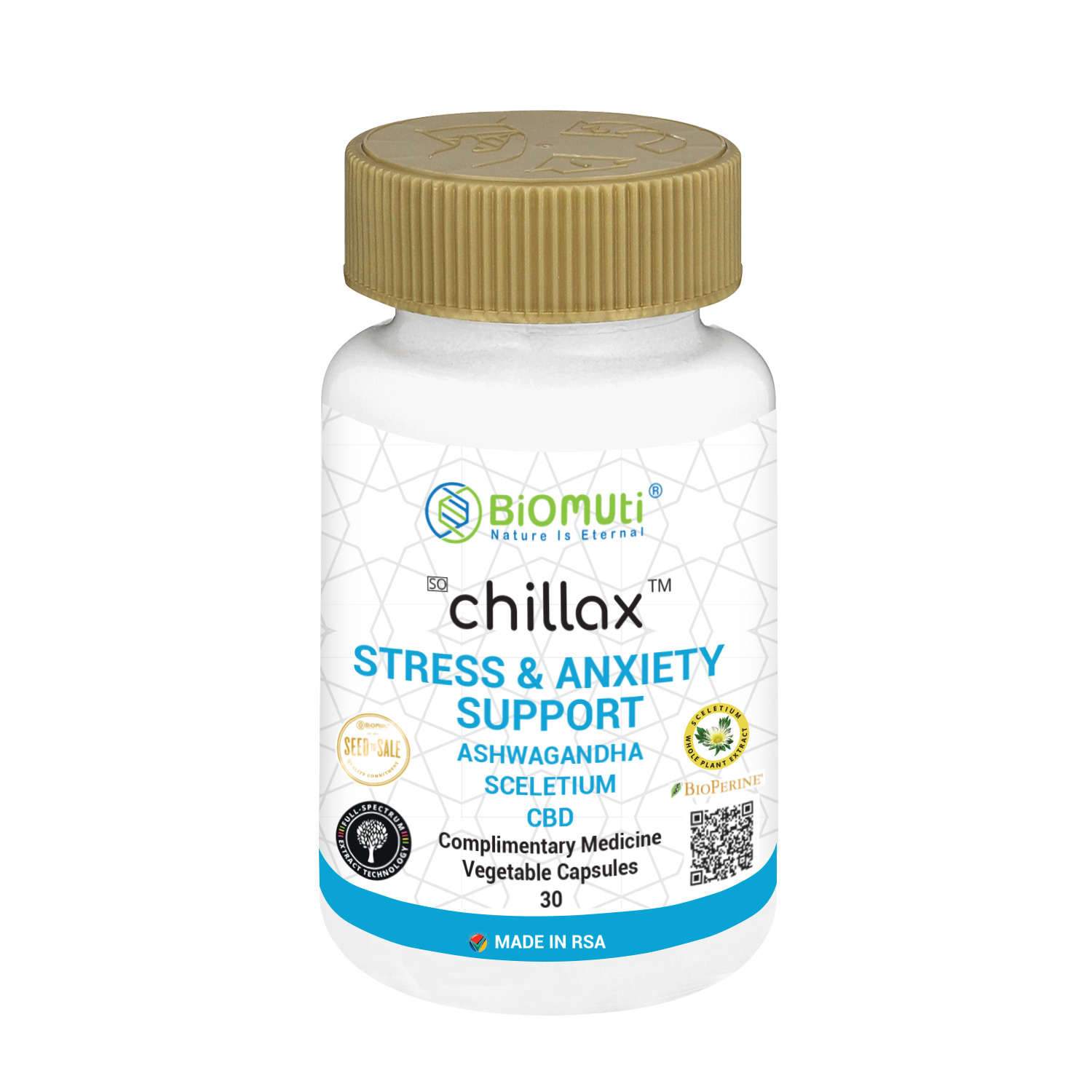
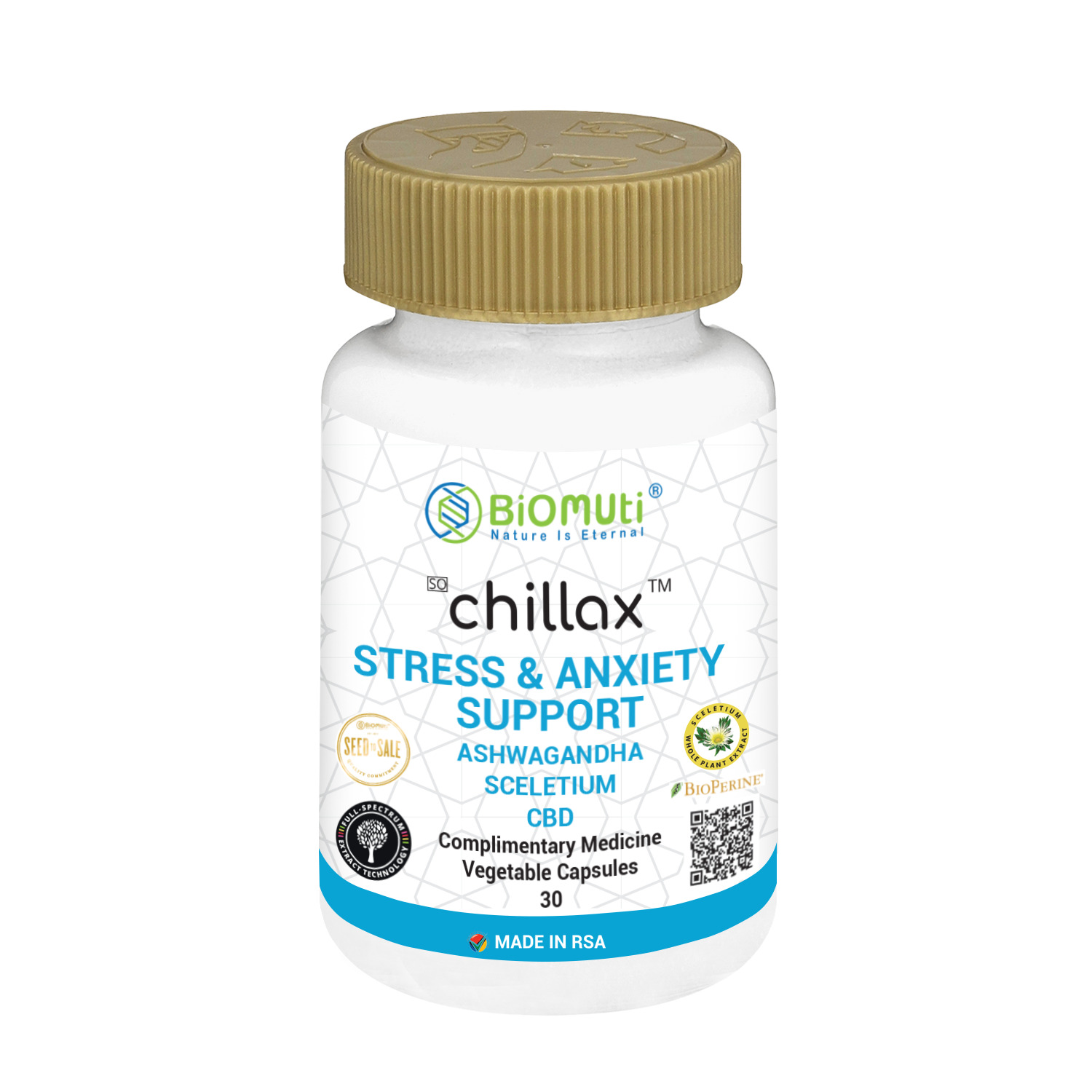
Ashwagandha pairs well with a calming daily ritual rather than as a standalone "magic pill". At BioMuti we often recommend stacking it with magnesium glycinate, a wind-down routine, and — for adults looking for additional support — our Chillax blend, which combines ashwagandha with lemon balm, L-theanine and GABA-supportive nutrients for daytime calm without drowsiness.
Key takeaways
- Ashwagandha has meaningful peer-reviewed evidence for reducing perceived stress and lowering cortisol in chronically stressed adults.
- Effects build over 2–12 weeks, not immediately.
- Standardised extracts (KSM-66, Sensoril) at 240–600 mg/day are the most studied formats.
- Generally safe; avoid in pregnancy and consult a doctor if you are on thyroid, immune or sedative medication.
- Buy from a reputable SA supplier that publishes third-party testing.
This article is for educational purposes only and does not constitute medical advice. As per South African Complementary Medicine regulations, no claims are made regarding the treatment, cure or prevention of any disease. Speak to a registered healthcare professional before starting any new supplement, especially if you are pregnant, breastfeeding, taking medication, or managing a chronic condition.